Dining Etiquette Myths and What Actually Matters
Dining etiquette occupies a strange space between genuine social consideration and outdated formality. Many rules people anxiously follow from Victorian-era customs designed to show wealth and social status rather than facilitate comfortable shared meals. Other guidelines dismissed as pretentious serve practical purposes that enhance everyone’s dining experience.
Separating meaningful etiquette from old-fashioned rituals helps customers focus on what truly matters: showing respect for fellow diners, restaurant staff, and the experience of sharing the meal together. Understanding which rules to focus on and which can be safely ignored reduces mealtime anxiety while ensuring your manners contribute to rather than detract from the occasion.
The Myth of Perfect Fork Placement
Traditional place-setting rules dictate precise fork, knife, and spoon positioning, with the outside utensils used first, working inward through the courses. Many diners panic when confronted with multiple forks, worried they’ll commit unforgivable errors by selecting the wrong implement.
The reality: utensil confusion seldom matters outside formal events with traditional multi-course service. Most modern-day restaurants use simplified place settings where distinguishing salad from dinner forks presents little challenge. Even if you select the wrong utensil, switching utensils mid-meal does not offend. Servers can provide clean replacements if needed.
Hold flatware properly rather than gripping it like a shovel, cut food into reasonable portions instead of sawing aggressively, and place used utensils on your plate, not on the table. These fundamentals avoid awkward eating mechanics that distract fellow diners.
Elbows Off the Table Or Not?
The prohibition against elbows on tables is among the most frequently cited etiquette rules. Parents worldwide correct children for this supposed transgression, insisting that diners keep their hands in their laps between bites.
Historical context reveals this rule’s origins in practical rather than moral concerns. Medieval dining involved shared trenchers and crowded benches where elbows on tables genuinely disturbed neighbors. Later, the rule became a class marker distinguishing refined diners from laborers who leaned heavily on tavern tables after exhausting physical work.
Modern dining involves individual place settings with enough personal space. Resting forearms, and not elbows, on the table between courses causes no disruption and enables conversation by maintaining engaged posture. The key distinction involves timing. Elbows off while actively eating, relaxed positioning is acceptable during conversation.
The Wine Service Performance
Wine service rituals, from presenting bottles for approval to tasting small pours before service, intimidate many diners who worry about performing improperly. The elaborate ceremony suggests extensive expertise requirements and high stakes for errors.
The practical purpose behind wine service involves quality verification, not testing your sommelier skills. When servers present bottles before opening, they’re confirming you received what you ordered rather than asking for approval of the wine itself. The taste pour exists so you can verify the wine hasn’t spoiled (corked, oxidized, or otherwise flawed), not to assess whether you like the selection.
You can’t “fail” wine service. If the wine smells like vinegar or wet cardboard, say so – the bottle has legitimate problems. If you simply dislike your choice, that’s different, but honest feedback about flawed wine serves everyone. Beyond flagging obvious defects, simply nodding acceptance after the taste pours suffices.
Focus on basic respect during wine service. Don’t handle your phone during the presentation, give the server reasonable attention during the pour, and speak up about legitimate quality issues rather than silently suffering through flawed bottles.
Napkin Neuroses
Detailed napkin rules govern when to put them on your lap, how to fold them when temporarily leaving the table, and where to place them after finishing the meal. These guidelines create anxiety disproportionate to their actual importance.
The simple truth: napkins protect clothing and provide a discreet place to wipe your mouth. Place the napkin on your lap shortly after you sit down. Use it as needed during the meal. When leaving temporarily, place it on your chair (not the table with food debris visible). After finishing, set it aside loosely rather than attempting to reconstruct it.
The Bread Basket Protocol
Traditional etiquette dictates breaking bread into small pieces and buttering each piece separately rather than slicing and buttering entire rolls. This guideline baffles many diners, who wonder why anyone cares about the methodology for bread consumption.
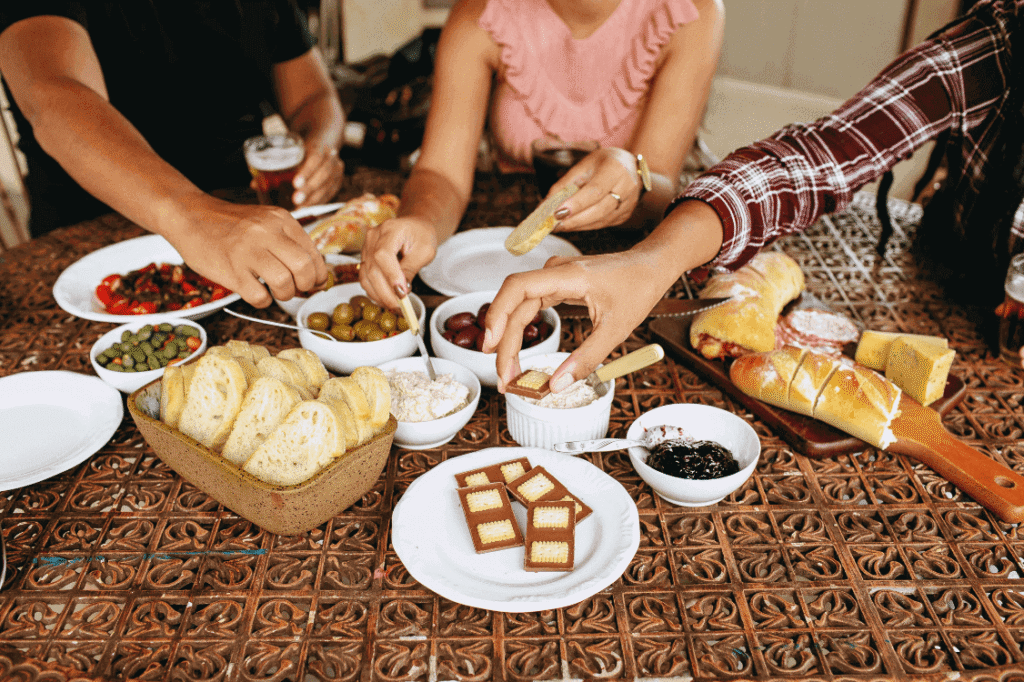
The underlying principle involves eating pace and portion control in communal settings. Taking small pieces from shared bread baskets ensures a sufficient supply for all diners. Breaking rather than cutting bread is associated with historical breadmaking. When loaves were dense and crusty, breaking made practical sense. In contemporary casual dining, the method of bread consumption is of scant importance. What counts is sharing communal items fairly, maintaining reasonable table cleanliness, and not stuffing yourself with complimentary bread before meals are served.
Phone Usage
Traditional etiquette books couldn’t address smartphone use at the table, yet this is perhaps the most pressing contemporary dining behavior question. Strong opinions exist about phones at the table, ranging from absolute prohibition to complete permissiveness.
Reasonable consideration suggests phones shouldn’t dominate shared meals. Taking important calls, responding to urgent messages, or quickly capturing photos of memorable dishes all fall within acceptable bounds. Extended scrolling through social media, conducting loud phone conversations, or photographing every course from multiple angles all interfere with the shared dining experience.
Respect the people physically present at your table. Brief phone interactions are not disruptive. Extended device engagement suggests your tablemates rank digital distractions above social consideration, a breach of social norms regardless of formal rules.
Tipping Confusion and Anxiety
Tipping practices raise significant concerns, with diners unsure about appropriate percentages, whether to tip on pre-tax or post-tax totals, and how to handle service issues. This anxiety partly stems from tipping’s unusual position, mandatory in practice yet theoretically optional.
Current U.S. dining standards suggest 18 to 20% for competent service at full-service restaurants, with adjustments upwards for exceptional experiences or downward for legitimate service failures. Calculate tips using the pre-tax total for simplicity. And slightly more when servers handle complex requests, large parties, or difficult modifications.
Importantly, distinguish between kitchen problems and service issues. Incorrect orders, long wait times despite attentive servers, or food quality problems don’t reflect server performance. Reduce tips when the service itself is at fault. Inattentiveness, rudeness, or neglect are genuine failures.
Keep in mind that tips account for the majority of servers’ income in many U.S. restaurants. Stiffing servers over kitchen issues or using minor service defects to justify undertipping shows genuine unkindness rather than enforcing appropriate standards.
Ordering Etiquette and Decision-Making
Elaborate guidelines suggest deferring to hosts, sidestepping the most expensive items when dining as a guest, and ordering courses that match others at your table. These rules contain kernels of consideration wrapped in unnecessary formality.
Order relatively quickly when ready, rather than monopolizing server time with extensive questions or indecision. Ask sensible questions about unfamiliar dishes without conducting unreasonable interrogations. In group settings, coordinate roughly on the number of courses. Don’t order appetizers, entrees, and desserts when others order only entrees.
When someone else pays, exercise proper restraint without performing elaborate decorum. Ordering the most expensive items on the menu might feel presumptuous, but you don’t need to restrict yourself to salads. Reasonable mid-range selections show suitable consideration.
Respect the server’s time and attention, make decisions without excessive deliberation, and show appropriate restraints when dining at others’ expense without performative, flawed modesty.
The Real Core of Dining Etiquette
Strip away arbitrary rules and old-fashioned formality, and dining etiquette reduces to fundamental respect and consideration. Chew with your mouth closed because open-mouth chewing creates displeasing visuals and sounds. Speak at sensible volumes because they’re professionals deserving respect, not mere servants.
At Chicken Maisón in Redondo Beach, we create welcoming environments where diners can unwind and enjoy food without anxiety and obscure rules. Whether you perfectly master formal place settings or simply show up ready to enjoy quality meals with good company, you’re welcome at our table — at our Crenshaw location or any Chicken Maisón near you. Good dining etiquette ultimately means respecting others, engaging genuinely with your companions, and appreciating the effort behind your meal. Everything else is just details.